Bruges
From the Flanders coast…
…to its first important port. At least that is the Bruges interpretation. I arrived at my first dormitory room in a youth hostel, occupied by two very youthful indeed roomates. Gen Z ladies from Finland, the Netherlands, and Canada. They were very sweet, and all spoke English extremely well. Including the Canadian, ha.
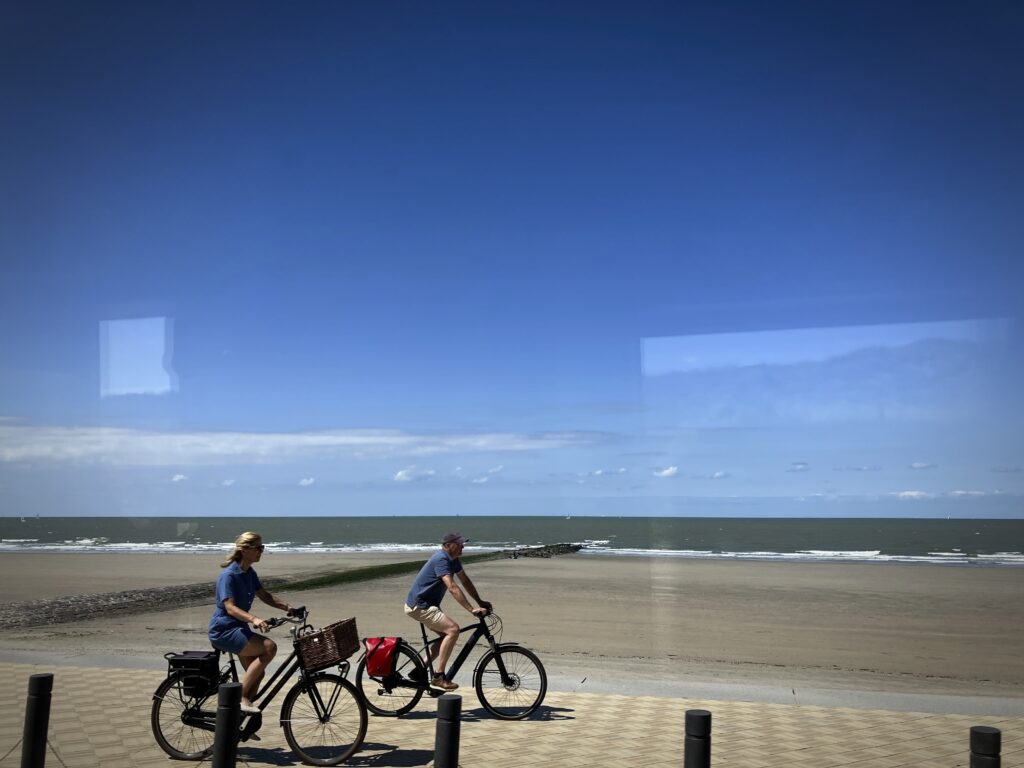
But first, the day on the Kusttram, or Coast Tram (you are getting the idea how Dutch often works?) from De Panne almost to the end of the line at the north end of the Belgian coast. It went through beach towns, dune preserves and along the beach. You can see I took this as we rode along.
I bought a day pass and had planned to hop on and off as something piqued my interest. They come every ten minutes in summertime, so easy enough, except I somehow forgot that I would be dragging my rolling suitcase along with me everywhere. Over cobblestones (loud), on sandy paths in the dunes…it got old. About halfway up the coast I got off at a town called Niewpoort. Use your newfound Dutch knowledge to figure out what that means. It was charming and I walked up a small street until I came to a cobbled square, and was so sick of clonking over them I picked up my suitcase and walked across to the Tourist Bureau.
Now, you know I hate them. However Benjamin was so excited to show me Niewpoort that he gave me a walking map and offered to store my luggage. Then from my bag I produced a bottle of the excellent beer from my hotel, which the proprietor had given me as a parting gift. Benjamin offered to chill it for me for when I got back. I handed it over, and he took my phone number and name and put it on my suitcase, asking if there wasn’t a bomb in it by any chance. And then I went ahead and did the walking tour. How could I not?
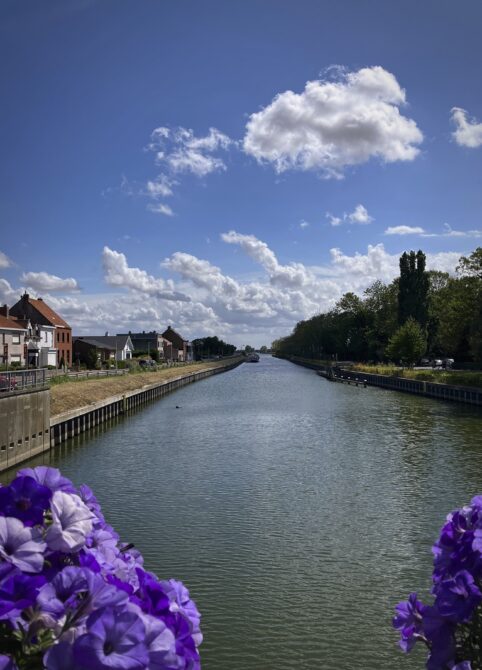
After circling the village center, the path crossed three or four locks, each leading to a different canal. As bicyclists passed over, I had a moment that reminded me of reading “Hans Brinker and the Silver Skates” in a child’s storybook at my grandma’s house. They really live like this.
Benjamin confirmed they did have a comfortable life and pointed out that most Belgian men have pot bellies, himself included. I asked him about King Albert I, who had a huge memorial near these locks. He explained that he was king of Belgium during WWI, and came up with the idea to flood the fields to stop the Germans. Being that much of the Low Countries (West Flanders is basically Southern Holland) is below sea level, they have dykes and locks to keep the sea out of their reclaimed land, but can open the locks to let the rivers flow out, during low tide, I assume. The flooding idea didn’t work, it seems.
After seeing most of the coast, I got off the tram and caught a train to Bruges, and my hostel room.
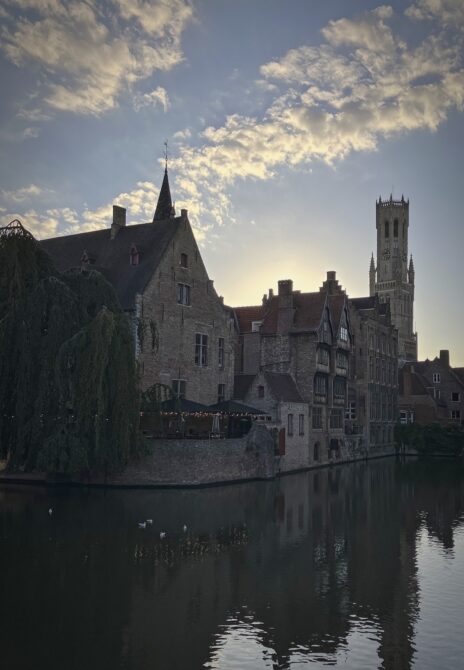
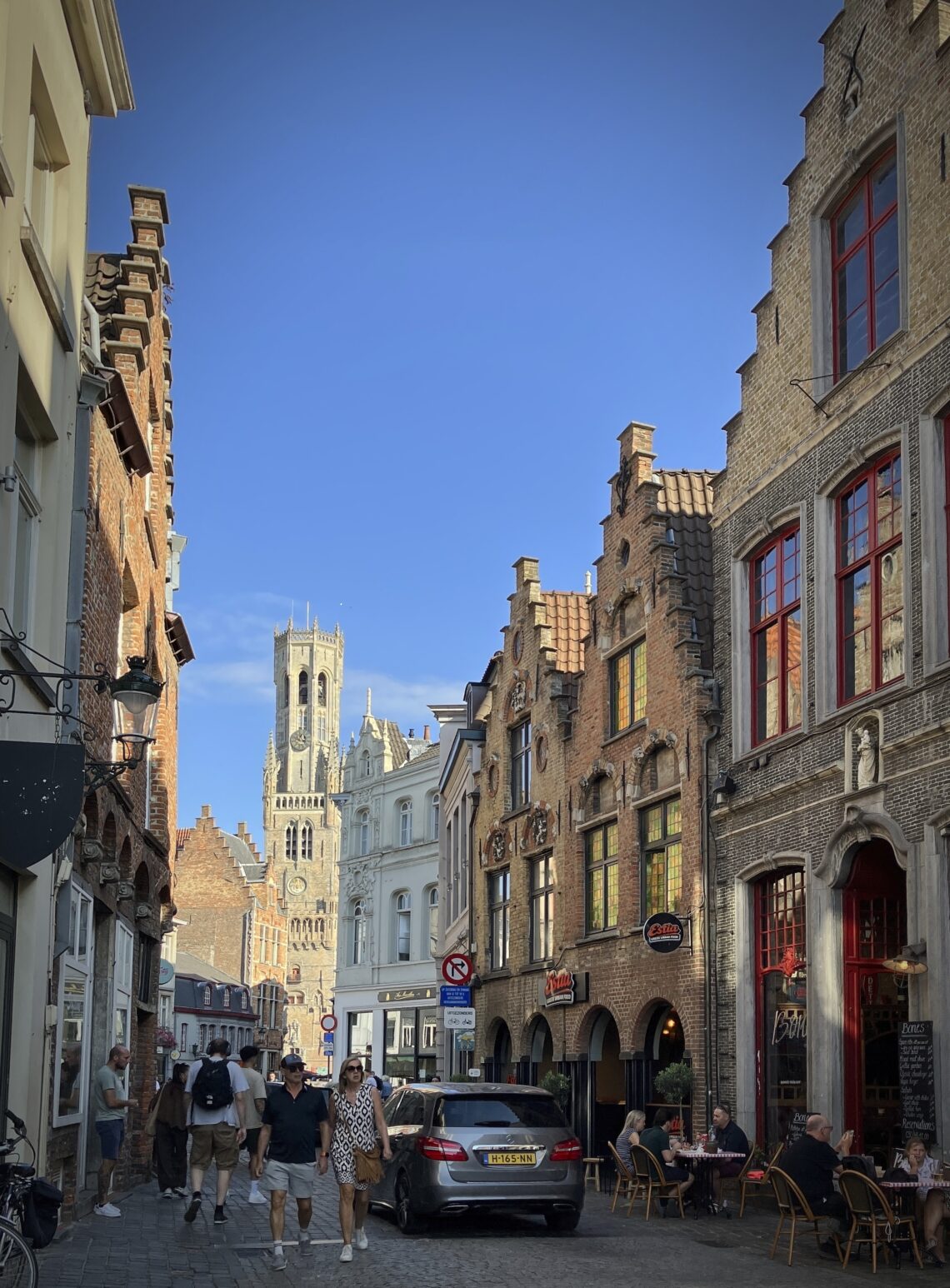
I enjoyed a truly good Flemish beef stew, and took a walk along the canals. You may have noticed that tall, rather odd looking tower in our featured photo, and again from this side. It is a belfry, and apparently Flemish cities like to have them. I do not know why, it might be something my Research Department could tell us. I do know that people love to climb all the stairs to get what they say is a spectacular view of old Bruges. They say, not me, because I tried yesterday and today, and it was booked full. This is a world tourist site.
I did get a good feel of the wealth they had here, walking around the Market Square, and finding the old Bourse, or stock exchange. I heard a tour guide telling a group that Bruges was the New York City of Europe in the 1200s, and they claim to have invented the stock exchange entirely. The date on the old Bourse says 1270, which is much earlier than Amsterdam. The city grew rich, and peaked about, yes, 1400. The Northern Renaissance is not talked about as much as the Italian, though it seems quite impressive, and perhaps earlier. I wonder if the Pope started to restrict their profits, and so they started the Reformation to get him off their back. Follow the money.
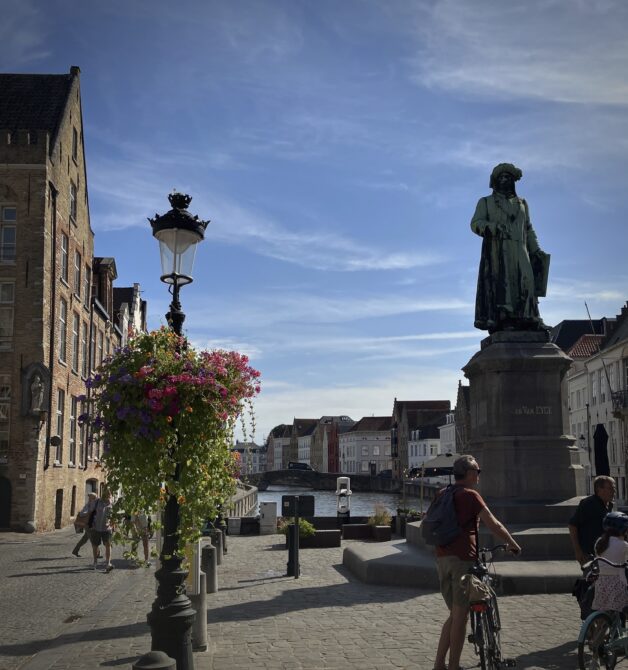
After the stock exhange, which now houses a radio station, I walked over to the original port, where they received all their worldly trade up a grand canal from the North Sea. Along with wealth, art flourished, and Jan van Eyck painted here and there are still a few of his masterpieces. I’m sorry to say I did not see them, but I had a nice meal looking at his statue next to the old harbor, by the old toll house in the Hanseatic Quarter.
I took a really lovely canal tour by boat in the cool of the morning. It was the first tour of the day, and I was the first one on the boat. The woman pilot flirted outrageously with me, and gave us the tour in her gravelly English, French, and German. At the end she put out a call for tips, and sure, ok, I tossed a few euros in the hat. It was fun.
She mentioned that the canals were also the sewers for the whole city, which is interesting. Something rarely mentioned is how often you will be walking on a city sidewalk in Europe and get a lungful of strong sewer smell. Not always, but at some point in the day. Perhaps it used to smell much worse. I saw a couple of old wells on the streets too, so as rich as they were, these burghers didn’t have indoor plumbing.
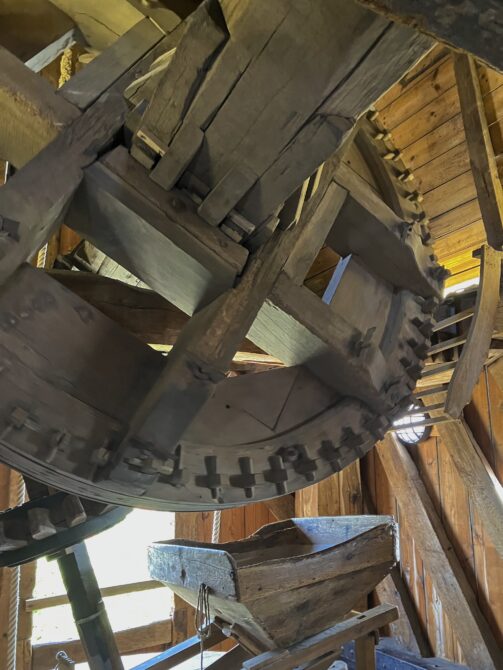
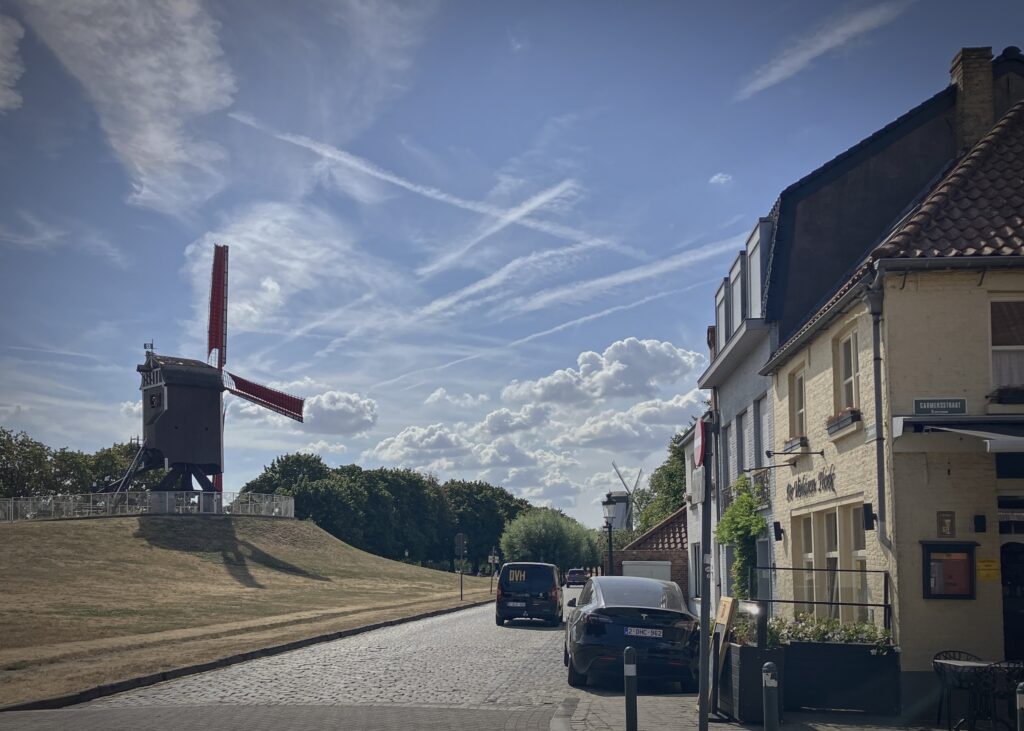
For my final Bruges excursion, I decided to walk to the edge of the old part of the city to where they had an old dyke along a big canal, and some windmills still stood where they were built to take advantage of the high point of land. There are very few left, and I read where this is the only time you can see them in a city.
One of them is still grinding flour, and it was open when I got there. The steepest flight of stairs I have ever seen in my life went up to the doors. Inside were two jolly young Belgians (with small pot bellies) who directed me up another short, steep stairs to where the big millstones were.
The wind came up and these wheels started to go! It was very elemental.
I was also very afraid to go back down the stair, and chatted with the guys as a stalling tactic. They agreed that in the U.S. they would have been sued within about ten days, but were very nonchalant about my ability to go back down. I swear, it was nuts, but you had to be there. I clung to the railing for dear life and backed down, as they recommended, on the tiny little treads.
At the bottom, I looked up and the big windmill was still turning. There are three left, in total, I think, but once there were more. They ground all the flour for the whole city, the info sheet said.
Then I took the train to Ghent, where I am now, in my hostel room.