Brussels
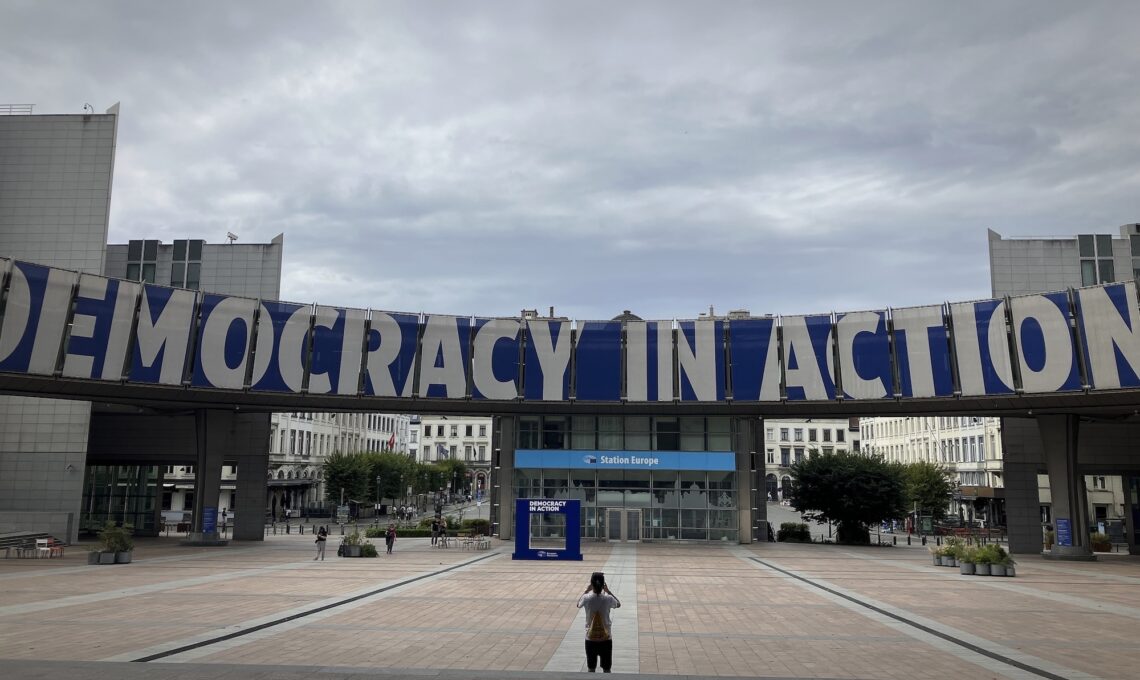
Not a single country in the European Union has English as their official language.
So who decided this sign in the courtyard of the European Parliament would be a great sign of democracy? But I couldn’t ask anybody, because it was a Sunday and nobody was there. Maybe it was Ireland’s massive clout what did it, or perhaps Malta. Those two accept English as an alternate language.
Another quick and cheap train ride, from Ghent, and I found my last hostel in Brussels, on a bland and grey street that is typical of that city. However, this was the nicest hostel by far, and somehow perhaps this affected our little room of six women in curtained bunks. We were of a range of ages, and all solo travelers. That is a remarkable self-selection if you think about it. Not everyone spoke English, but the other American and I started chatting immediately and it turned out she was from Tukwila, Washington. We decided to go get a burger at a place her foodie brother had recommended.
Mia told me there was a comedy showcase in the lobby of the hostel that night, for free, and so we went. We sat in the front row, which was a fine idea. All of the comics did their routines in English, though only three were native speakers–two Englishmen and one young Irishman. I wondered how the idea of stand up would translate from other cultures, and I’m not convinced that it does. They had clearly studied a lot of American comics, and understood the conventions. Of course to be good at it is very difficult, even if you are an American. Maybe it only works if you’ve been the most powerful culture in the world and feel the need to be self-deprecating. The blonde Polish woman put herself down for being white, and a local, dark brown woman bragged she was better than Belgian, because “Belgian Chocolate.” Neither were funny. But it was great just to be around people who were wanting to have a nice time.
The next day, I was feeling the strain of constant sightseeing, and whilst standing in Brussels’ famed Grand Place, I watched an electric replica of a ‘horseless carriage’ taking a few tourists around the cobbled streets. What a cool idea! No real, live horse to feel sorry for, and a very Belle Époque tone to suit much of the architecture, and the current age. I buttonholed two different older women who were examining it, to see if they wanted to share the price, but alas, no. So, I hired the whole thing for just me, and told David to embark upon his tour. I placed my weary body in the center of the rear seat, and stretched my arms across the back to allow the wind to air my frilly, gauzy, flowered dress. 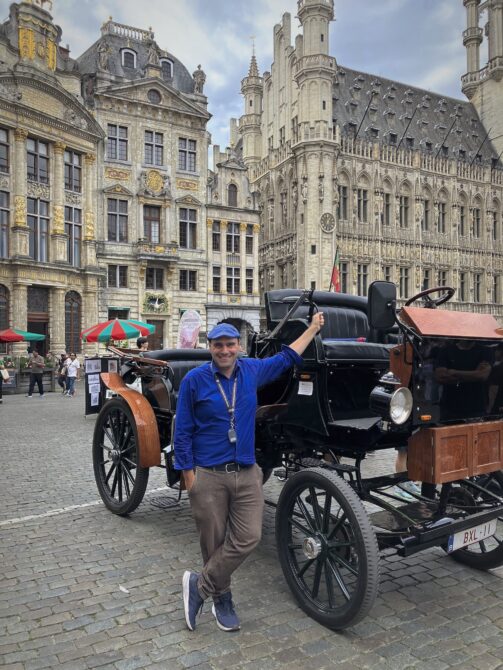
It was in this regal attitude that I observed from on high the hundreds of people packed around us in the narrow cross streets, to look at a tiny statue of a fat baby with water coming out the end of his very tiny penis. I trust your Flemish in deciphering his name: “Manneken Pis.” It is the most popular sight in Brussels. David gave up waiting for me to take a picture, and moved on.
We passed a famous chocolatier, and David told me it had been bought by “the Chinese.” The many elegant-looking fake ones had jaded me at this point, and I figure that food tourism is dead for the average tourist. I’m going to stick to grocery stores on my next trip.
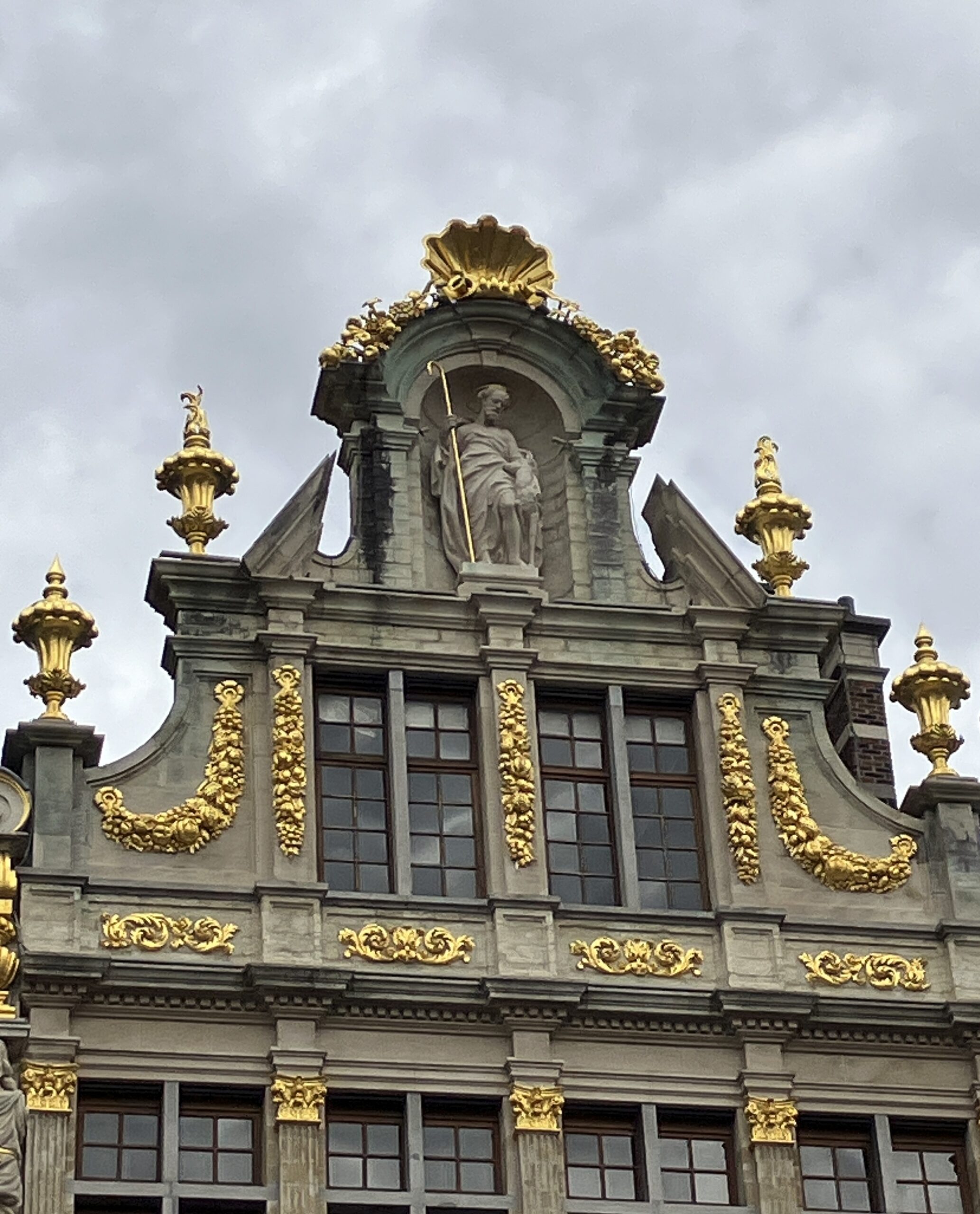
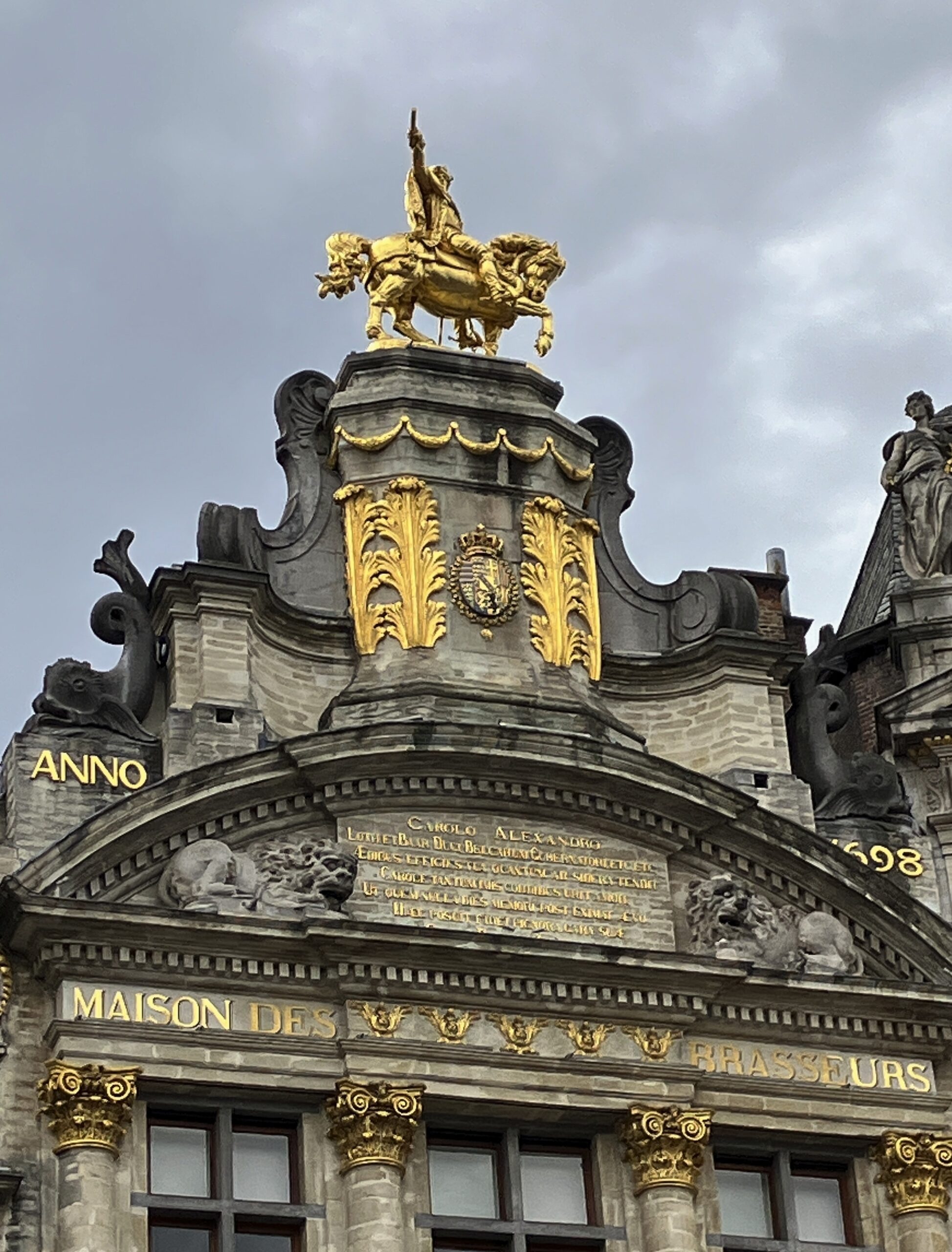
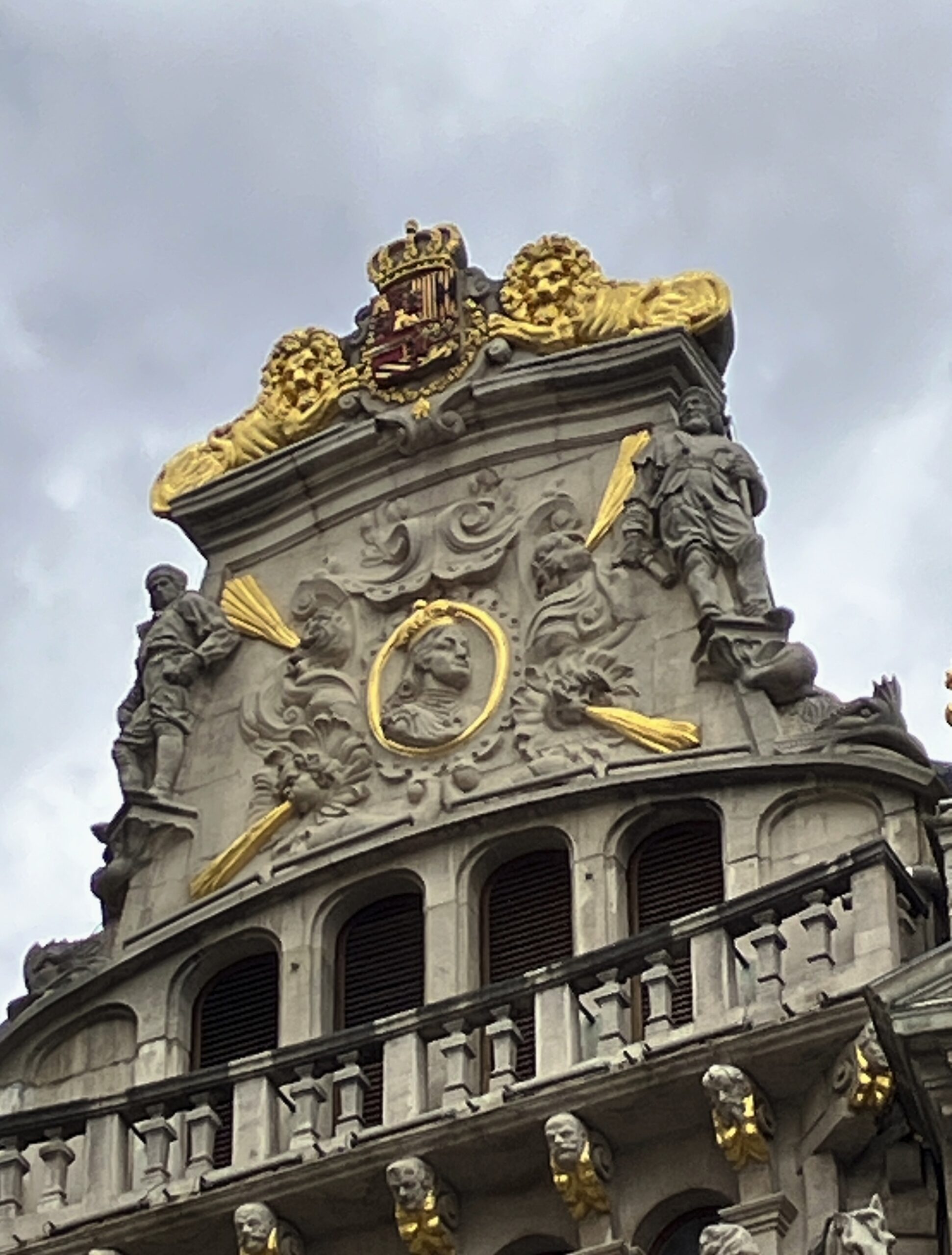
We returned to the Grand Place, and I took pictures of the distinctive tops of the gilded guild halls. Click on a few, they proudly represent ‘economic power and social pride.’
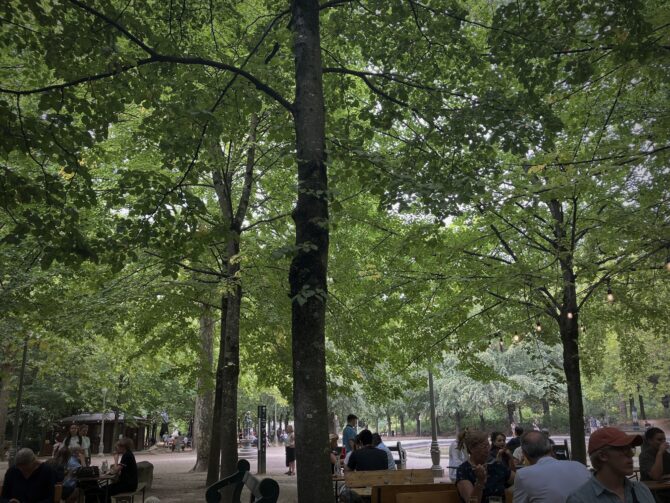
Then I started walking up the Mont des Arts toward the Royal Palace. It was getting muggy, and the climbing had made me hot, so the shady food shacks in the Parc de Bruxelles were a very serendipitous pit stop. I had a quinoa and nut salad for the roughage, and marveled at the artistry of the hungover youth who dumped most of a can of black olives into it. A job is a job, and can keep you in weed and beer. I left about half of them for him to use again.
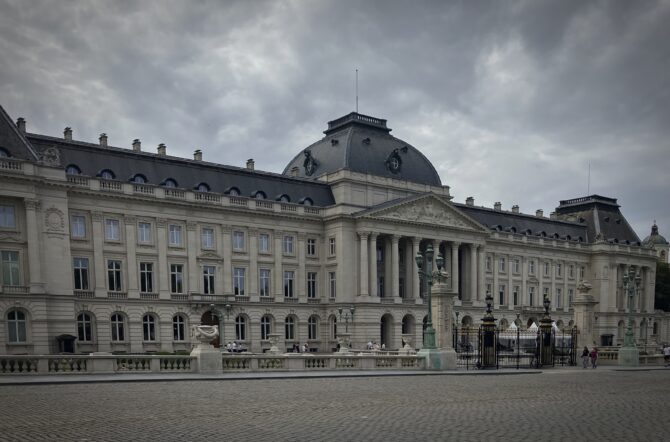
At the Royal Palace, I discovered I could not see the freshly restored interior, as all the time slots were booked. That was a mild disappointment. The King and Queen of Belgium work there, and call it their “administrative residence.” A local told me the Queen can be seen just walking the streets, doing shopping perhaps. Very much a couple of the people. I don’t know what administrative duties they perform that have any governing function at all. I assume none, as they are relatives of the royal family of the United Kingdom, who mostly cause trouble for a living.
This is feeling like a deeply cynical post, which just caused me to laugh out loud.
Here’s the expensive palace, which must be another symbol of democracy in action, here in the Capital of Europe.
I then passed on to the exceedingly drab and grey quarter that is home to the European Parliament. You’ve seen the most remarkable thing about that already.
The area around the palace had filthy sidewalks, with puke and broken glass, that the police were ignoring. The garbage cans all around the elegant symmetry of the Parc de Bruxelles were overflowing. One did not need to feel intimidated by all the royal splendor, but rather one was supposed to feel right at home as a peasant who doesn’t know how to clean up after oneself. At least this is what our regal self gathered from the distasteful effect. I flounced off in my frilly dress and caught the bus back to the hostel.
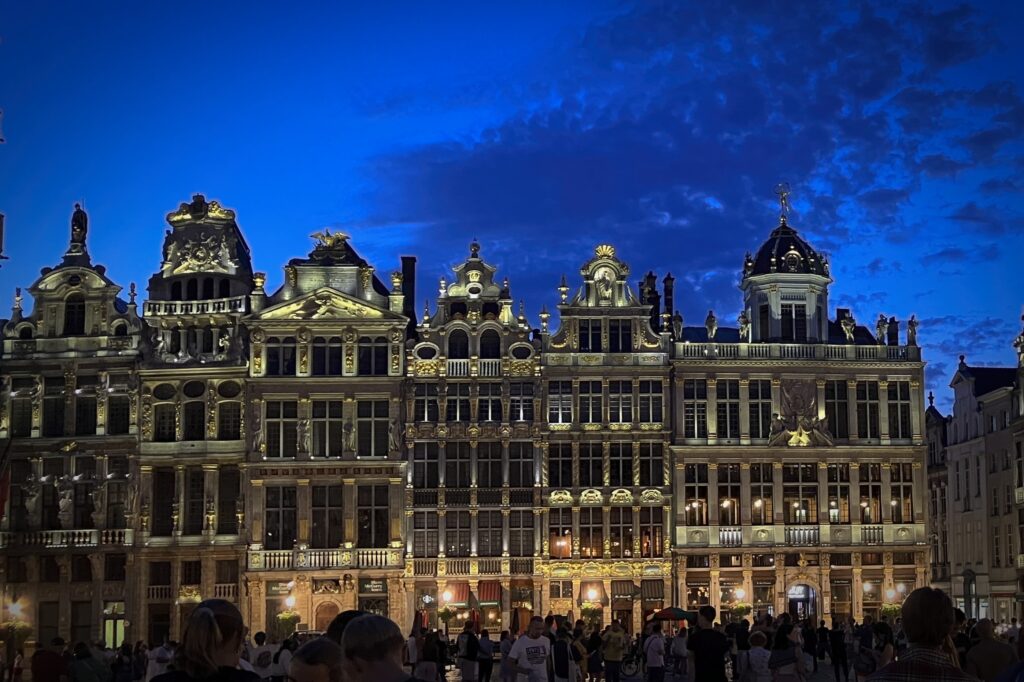
But there I decided to go to dinner with a new Danish friend, Christina, and later on, Mia had the excellent idea to go back to the Grand Place to see it after dark. Now that was a truly lovely tribute to the evolution of commerce from making things to tourism. A peaceful evening in the milling, confused crowd.