The Fruitful Years
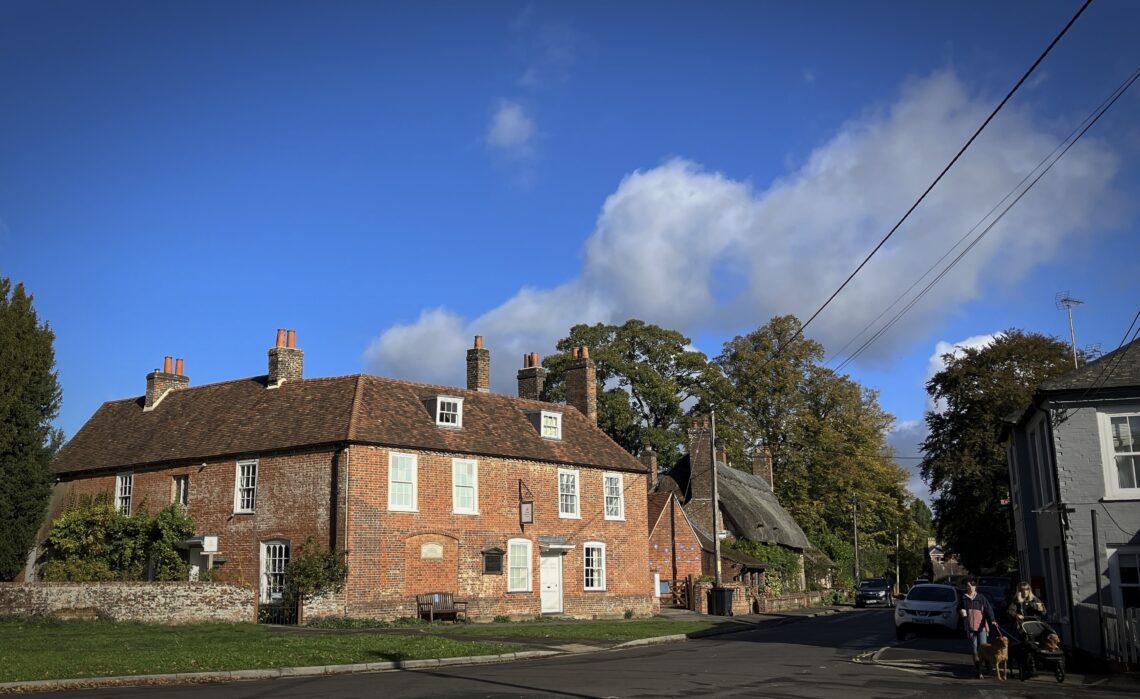
The house above is where Jane Austen finally felt like she could really start to write.
It may not look like much, and it was just the house of the bailiff (manager) of one of the several estates of her brother, Edward Austen Knight. It sits at a crossroads in the little hamlet of Chawton, Hampshire, England. It is about fifteen miles from Steventon, where she lived until age 25. But in between leaving her birthplace and landing here were about eight years of being bounced around from lodgings in Bath, Southampton, and the homes of friends and family members. She wrote little and published nothing during those years. This house was a big deal to her, and she wrote all of her published novels here. Considering that the brother who owned it had another, larger estate as well as many houses on all his estates, you wonder why they had to shift for themselves so long. He finally offered them this house exactly the same year his wife died unexpectedly, in childbirth. Of course nobody can say if that is a coincidence, and people here are careful not to insinuate anything.
I walked down to Chawton from the nearest small town, called Alton, where I am staying. It had a market and mail services, and I walked in Jane’s footsteps, passing under the train tracks and then through a tunnel running under a four lane freeway (or motorway, as they are called here). I did my best to ignore the noise of fast traffic as I went down the pretty lane into the tiny village. I was busy admiring a pub across the street, that was there in her time, as much of today’s village was, when I almost bumped into the edge of her house. I think I may have gasped. Wow. Aside from the street being paved, it seems to be fairly similar to how it was.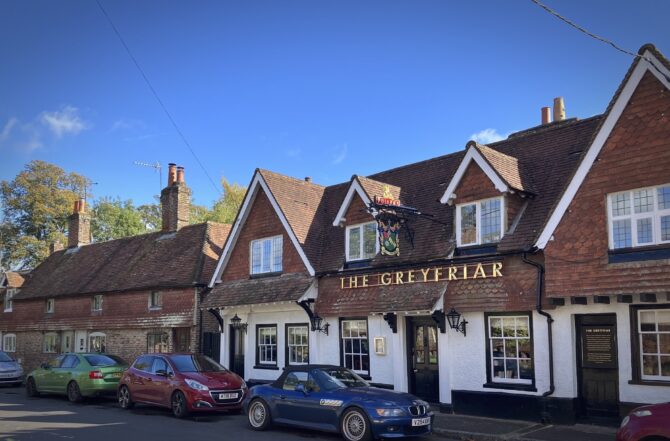
I went in and guided myself around her house, and it was well worth it, though of course the bedroom they say is hers is just their best guess. There are so, so many claims all over England, and no doubt Europe, that so-and-so slept here, or visited there, or sat and felt inspired somewhere, that it is obvious that many livelihoods are dependent on people seeking these legends.
But, one picture captures a couple of moments I had inside the house, that I felt were based in reality, and important. The first thing Jane did with her first earnings from her first published novel, was to buy herself a piano, or pianoforte as they were called then.
She had to leave behind the one she had when they left her childhood home, and it seems that James and Mary refused to give it back when their father died. The theme of pianos comes up in her novels quite a lot, and in all the movie adaptations they are very grand. To see this modest instrument in a very modest parlor, was satisfying and realistic. It is said she practiced every morning, while her mother and sister made breakfast. The museum admits the one they have is not hers, but that it is the same make and model. You can see it in the parlor, and the dining room beyond, where she sat at the table in the sun and did whatever you do at a nice sunny table. The whole house is very sunny, and those wallpapers are remade from scraps found in those rooms. Luckily it was not too crowded with people.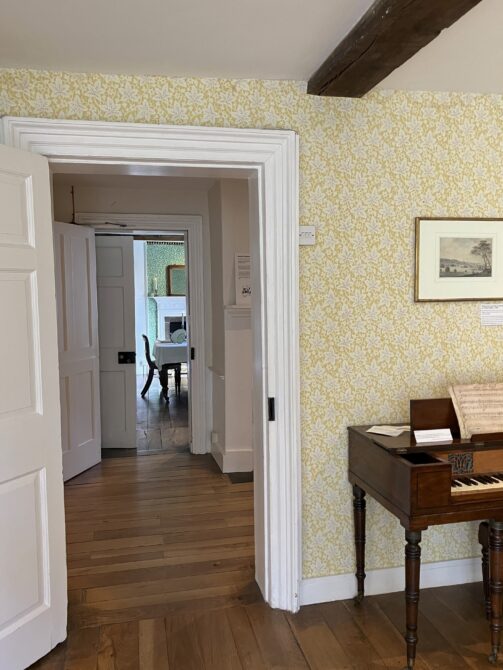
When I left the house, I found myself alone out front, and sat down on the bench you can see in today’s featured photo. The sun on my face and the brick wall was warm, and I closed my eyes and felt still and peaceful. No cars or people came down the street, and I opened my eyes and watched a big dragonfly hovering and criss-crossing in front of me. In the autumn of 1814 or 1815 it is thought that Anne Sharpe finally came back to visit Jane, from her new home in the north of England. Jane died a couple of years after that visit, but her last novel, Persuasion, about lasting love rekindled, is largely set in autumn. I turned then and saw this quote on the bench, from Persuasion, of which this is a part:
“Her pleasure in the walk must arise from the exercise and the day, from the view of the last smiles of the year upon the tawny leaves, and withered hedges, and from repeating to herself some few of the thousand poetical descriptions extant of autumn…”
I got up and walked further down the lane to the Great House, as they called her brother’s mansion. The year’s last smiles were downright elegiac.
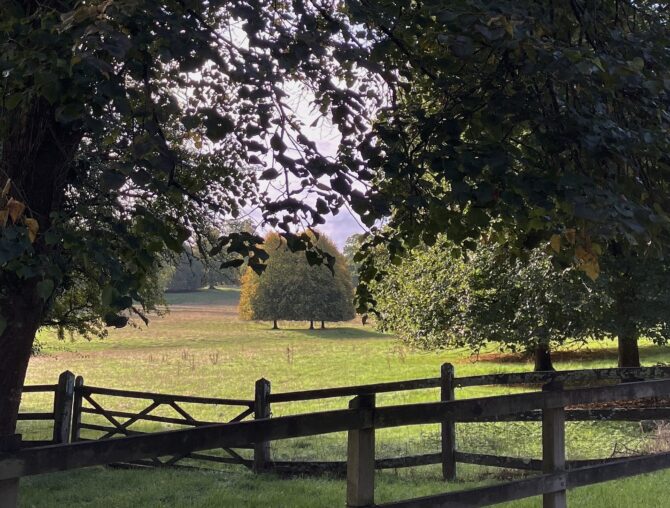
The Great House was built in the 1500s, and is Tudor or Elizabethan in style. It was the beginning of the time when they finally didn’t feel the need to have a castle with fortifications against other feuding noblemen, so it is gracious, and so are the park and gardens. There is a great deal of ancient and dark wooden infrastructure inside, and it is creaky and irregular to a degree I didn’t expect.
I had tea in the original kitchen, and learned, finally, what real Cornish clotted cream is supposed to be like. Then I walked around the gardens to see what a “shrubbery” and a “wilderness” and a “haha” are really like. Readers will appreciate these terms, and even Monte Python made a hilarious sketch in the 1970s, mocking the word “shrubbery.” But they are key to descriptions in all of the stories. The picture below shows a haha, which is a way to keep the sheep
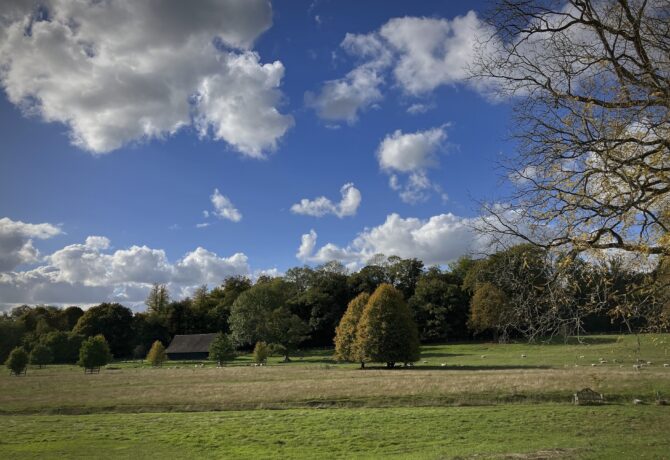 from getting into the park, without spoiling the unobstructed view of the rural picaresque that was becoming popular. It is a deep ditch, actually, with an iron fence along the bottom, which of course you can’t see.
A scandalous moment in Mansfield Park, occurs on a walk to see a haha.
I’m sorry, I didn’t take a picture of the shrubbery.
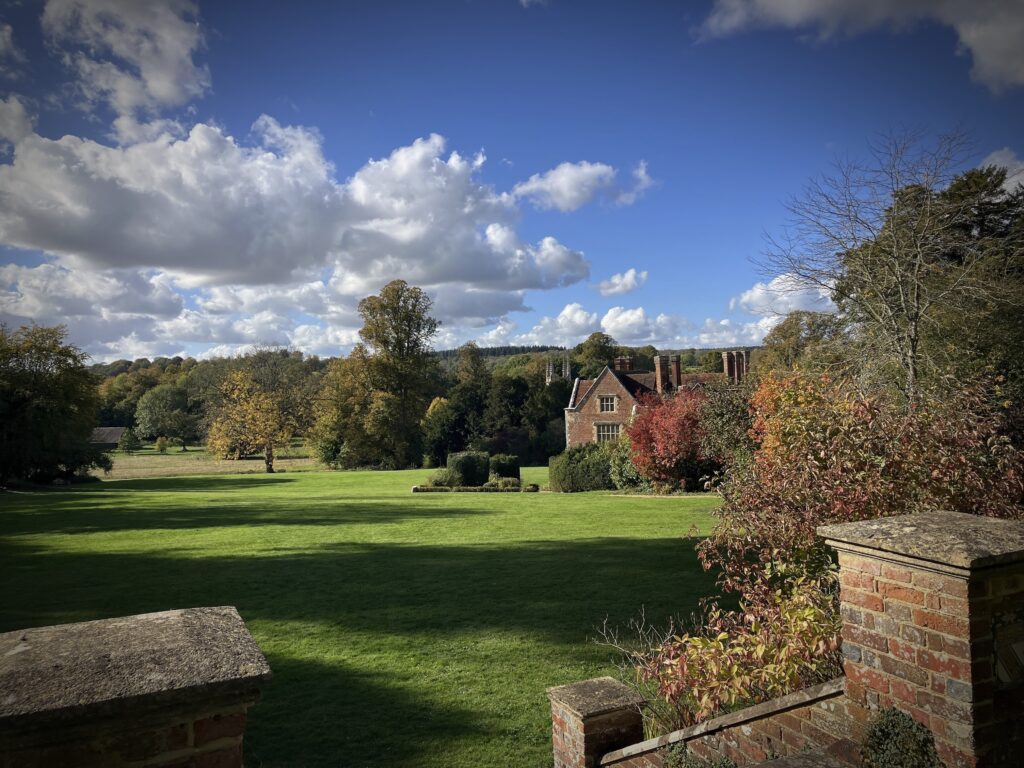
But here is a view of the back of part of the Great House, from a terrace that leads to some beautiful walled rose and herb gardens.
Out in the field below, I even came across a party of English people out hawking, for goodness’ sake. The hawk swooped back and forth just above us, its little bells tinkling.